
Medical note: This article is intended for general education, disability awareness and institutional understanding. It does not provide medical advice, diagnosis, emergency instructions or individualized treatment recommendations. Addison’s disease and adrenal crisis require management according to the individual patient’s clinical plan and professional medical guidance. Adrenal crisis is a medical emergency and requires immediate treatment and urgent medical care (NICE, 2024).
One of the most dangerous misunderstandings about Addison’s disease begins with something apparently reassuring: a person may look completely well. They may walk into a university office unaided, attend a seminar, hold a conversation normally, travel, work, exercise, laugh, and look no different from anyone else in the room. It is easy for an observer to convert that appearance into a medical conclusion: they look healthy, therefore their condition cannot be very serious. With Addison’s disease, that inference can be profoundly wrong.
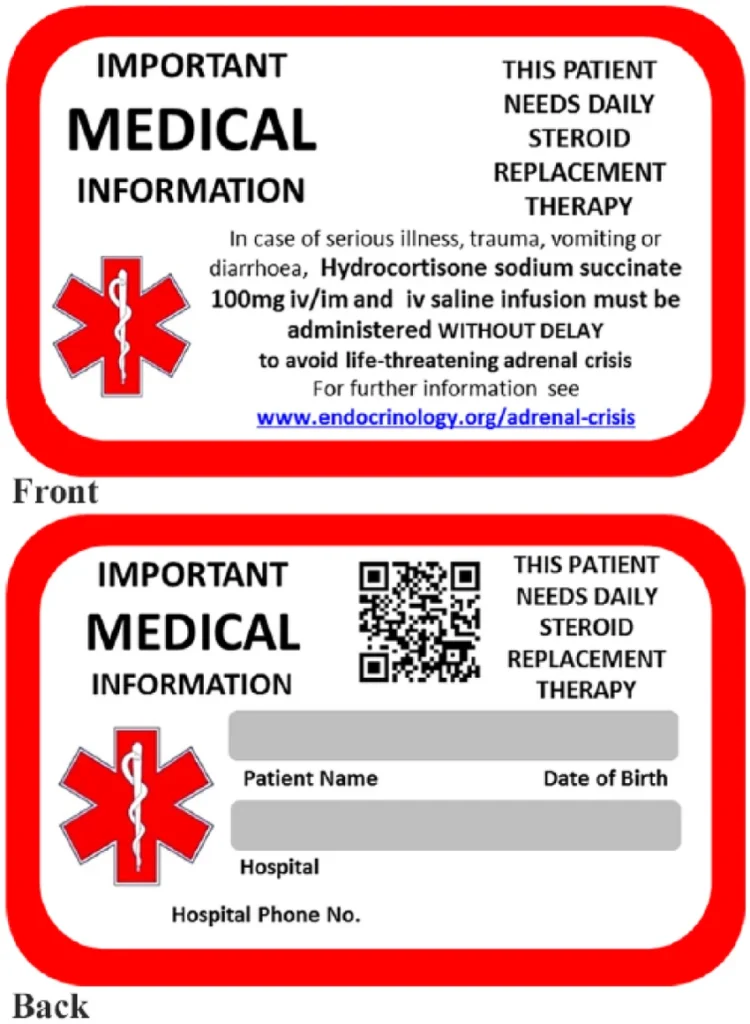
Addison’s disease is a form of primary adrenal insufficiency in which the adrenal cortex cannot produce adequate cortisol and, typically, adequate aldosterone. Cortisol is essential to physiological regulation and the response to stress, while aldosterone contributes to sodium, potassium, fluid-volume and blood-pressure regulation. Treatment with replacement hormones can allow people with Addison’s disease to live full and active lives, but replacement does not cure the underlying adrenal failure, nor does it eliminate the possibility of adrenal crisis (Bornstein et al., 2016; Dong et al., 2026; NICE, 2024).
This creates a paradox that is central to understanding the disease: the better Addison’s disease is managed, the easier it may become for other people to underestimate it. Successful treatment can suppress many outward signs of illness sufficiently well that the continuing physiological dependence on treatment becomes socially invisible. The person looks well partly because medication, planning, self-management and physiological compensation are working. Outward normality is therefore evidence of successful management; it is not evidence that the underlying vulnerability has disappeared.
Addison’s disease is explicitly described as an invisible disability
The phrase invisible disability is not merely a rhetorical label being imposed from outside. The UK Addison’s Disease Self-Help Group, in guidance developed with support from its Clinical Advisory Panel, explicitly describes adrenal insufficiency, including Addison’s disease, as “a rare condition and an invisible disability.” The organization explains that these conditions are lifelong, can seriously affect normal day-to-day activities and are fatal if untreated, while also noting that not everyone with adrenal insufficiency personally identifies as disabled and that individual legal circumstances still matter (ADSHG, 2025).
The word invisible needs to be understood carefully. It does not mean that the disease has no symptoms, that its effects are imaginary, or that everyone with Addison’s disease experiences the same limitations. It means that many of the medically significant effects are not immediately visible to an observer. Chronic fatigue does not necessarily alter someone’s appearance. Orthostatic hypotension may become apparent only when the person stands, becomes dehydrated or is physiologically stressed. A strict medication schedule is invisible unless someone sees the tablets being taken. An emergency hydrocortisone injection kit may remain inside a bag. Additional planning around illness, hydration, salt balance, temperature, travel, sleep, medical appointments and recovery is largely hidden from view.
This distinction matters because visible disability automatically supplies information to an observer. A wheelchair, white cane, prosthesis or other visible aid may immediately signal that assumptions about mobility, access or physical capacity need to be reconsidered. Invisible disability provides no equivalent automatic signal. The observer has to know about the condition, believe the information provided, and resist the intuitive tendency to use outward appearance as a proxy for physiological capacity.
That tendency is exactly where misunderstanding begins.
The person can look healthy because treatment is working
There is a particularly important legal and conceptual point here. UK Equality Act guidance explicitly addresses conditions whose effects are controlled by treatment. When determining whether an impairment has a substantial adverse effect, the guidance says that the effect should generally be considered as it would be without the treatment or corrective measure. It specifically recognizes that continuing treatment may mask or ameliorate a disability so effectively that its effects are “completely under control or not at all apparent” (Office for Disability Issues, 2011).
That principle fits Addison’s disease unusually well. Hormone replacement does not simply make someone feel a little better. Cortisol is essential for life. In primary adrenal insufficiency, glucocorticoid replacement substitutes for hormone that the adrenal glands can no longer produce adequately, while mineralocorticoid replacement is used when aldosterone function is deficient (Bornstein et al., 2016). The person standing in front of an administrator looking perfectly healthy may therefore be doing so while continuously dependent on replacement therapy for a physiological function that an unaffected person performs automatically.
This creates what I would call the paradox of successful compensation: the more successfully a treatment conceals the outward consequences of a serious impairment, the more tempting it becomes for an uninformed observer to conclude that the impairment is insignificant.
That logic is backwards.
A person with severe myopia does not cease to have an underlying visual impairment because glasses work. A person whose epilepsy is well controlled does not prove that epilepsy was never significant. Likewise, successful hormone replacement in Addison’s disease does not mean the adrenal cortex has recovered its ability to provide a normal physiological stress response. The disease can be well managed and medically serious at the same time.
Looking well can be evidence that treatment is working. It is not evidence that treatment is unnecessary, that symptoms are absent, or that the underlying disease is mild.
Invisible does not mean symptom-free
There is another misunderstanding worth correcting. Calling Addison’s disease an invisible disability does not mean that people with the condition experience no perceptible daily effects until an adrenal crisis suddenly appears. Chronic or long-lasting fatigue is among the most common symptoms of adrenal insufficiency. Muscle weakness, reduced appetite, gastrointestinal symptoms, low blood pressure, dizziness or fainting on standing, salt craving and other symptoms can also occur (NIDDK, n.d.). NICE specifically includes fatigue severe enough to significantly affect activities of daily living among the signs clinicians should consider when monitoring for glucocorticoid under-replacement (NICE, 2024).
The word fatigue can itself cause misunderstanding because almost everyone knows ordinary tiredness. It is easy to hear “fatigue” and mentally translate it into “feeling a bit tired after a long day.” Chronic disease-related fatigue can have a very different functional meaning. It can affect concentration, stamina, physical activity, the amount of recovery required after exertion or illness, and the ability to sustain the same level of performance throughout a long day. Importantly, severity varies considerably between individuals and across time. A person being capable of an activity once does not necessarily establish that they can perform it repeatedly, safely or without disproportionate recovery.
This is supported by broader evidence on quality of life. A systematic review of quality-of-life research in adrenal disease found that treatment improves quality of life but does not necessarily normalize it completely (Ho & Druce, 2018). A recent review of Addison’s disease in The Lancet Diabetes & Endocrinology likewise emphasizes that, despite corticosteroid replacement, people with Addison’s disease continue to experience reduced quality of life and increased mortality compared with the general population. One proposed contributor is the inability of conventional replacement therapy to reproduce the normal circadian and ultradian rhythms of cortisol secretion (Dong et al., 2026).
This is important for university and workplace settings because disability is often judged through visible performance. A student attends a two-hour seminar, therefore somebody assumes they can tolerate an eight-hour day under identical conditions. A person makes it to an appointment, therefore the journey must have been easy. Someone completes an examination, therefore the environmental conditions were harmless. A person looks energetic for twenty minutes during a meeting, therefore chronic fatigue cannot be substantial. These conclusions confuse observed performance at one moment with sustainable functional capacity over time.
There is an invisible workload behind appearing well
Chronic disease management also contains work that other people rarely see. Medication must be available and taken according to the prescribed schedule. Illness requires additional attention because glucocorticoid needs change during physiological stress. Emergency medication has to be available. Travel may require contingency planning. Medical monitoring takes time. A person may need to think about hydration, salt balance, access to medication, gastrointestinal illness, physical stress and whether circumstances are moving outside the range covered by ordinary replacement. ADSHG’s workplace guidance specifically notes variable energy levels, time-critical medication, potentially longer recovery from illness or injury, the risk of adrenal crisis and the need for emergency preparedness as practical issues that can affect people with adrenal insufficiency (ADSHG, 2025).
None of this is necessarily visible during an ordinary interaction. An administrator may see someone sitting calmly at a desk without seeing the medication schedule that made that ordinary hour possible, the emergency injection carried nearby, the fatigue experienced earlier that morning, or the recovery that may follow later. Successful self-management can therefore erase its own evidence from social perception.
There is a strange asymmetry here. If self-management fails, the disease becomes visible through illness. If self-management succeeds, the work required to prevent that illness becomes invisible. The individual may consequently receive the least recognition precisely when they have managed the condition most effectively.
This is one of the reasons invisible disability can be socially exhausting. The person may repeatedly have to explain risks that are real but currently unseen, describe limitations that fluctuate, and justify accommodations before a visible medical deterioration has occurred. The alternative—waiting until the disease becomes visibly severe enough to persuade everyone—is obviously a terrible model of disability support.
Temperature illustrates why environment can matter without being a universal symptom
Temperature deserves particular care because individual experience can be significant while the evidence does not justify saying that every person with Addison’s disease has “extreme temperature sensitivity.” Major clinical guidance does not list a single universal chronic temperature-intolerance syndrome as a defining feature of Addison’s disease. What can be said more rigorously is that environmental conditions can change physiological demand and can matter substantially for particular individuals.
Hot weather is especially relevant because sweating affects fluid and salt balance. ADSHG’s hot-weather guidance explains that people with Addison’s disease or adrenal insufficiency can find the condition harder to manage during hot weather and emphasizes hydration and salt/fluid balance (ADSHG, 2026). Heat also appeared among precipitating circumstances reported in a prospective study of adrenal crises, although gastrointestinal infection, fever and emotional stress were more common triggers in that cohort (Hahner et al., 2015).
This is a good example of why individualized accommodation matters. If a particular person has medically documented difficulty tolerating heat or another environmental condition, it is not scientifically rigorous to dismiss that limitation merely because temperature sensitivity is not identical in every patient. UK Equality Act guidance itself recognizes that environmental conditions such as temperature, humidity, time of day, tiredness and stress can exacerbate or lessen the effects of an impairment and should be considered when evaluating functional impact (Office for Disability Issues, 2011).
The right conclusion is therefore neither “everyone with Addison’s disease is extremely temperature sensitive” nor “temperature cannot matter because it is not universally listed as a diagnostic symptom.” The better conclusion is that environmental tolerance is an individual functional question and that heat has a plausible and documented relevance to fluid and salt management in adrenal insufficiency.
The most important vulnerability is the missing automatic stress response
The everyday burden of Addison’s disease is important, but the condition contains another level of vulnerability that explains why it must be taken seriously even when someone feels relatively well. In a person with intact adrenal function, physiological stress such as significant illness, trauma or surgery alters glucocorticoid demand, and the hypothalamic-pituitary-adrenal system participates automatically in adapting cortisol availability. In primary adrenal insufficiency, the damaged adrenal cortex cannot generate that normal adaptive response. The necessary increase in glucocorticoid support must therefore be supplied through treatment (Bornstein et al., 2016; NICE, 2024).
This creates a form of vulnerability that is almost impossible to see from appearance alone. At baseline, treatment may be entirely adequate. The person may feel reasonably well and look completely well. Then physiological circumstances can change: infection develops, fever rises, vomiting begins, diarrhoea causes fluid loss, surgery or trauma occurs, or another significant stressor increases glucocorticoid requirement. The adrenal glands cannot simply increase cortisol output to match the new demand, so management has to change appropriately and in time.
This is why “stable” and “invulnerable” are not synonyms. Stability describes the current relationship between physiological demand and available support. Addison’s disease leaves that relationship dependent on replacement therapy and emergency preparedness. A stable person is not secretly in adrenal crisis, nor should people with Addison’s disease be portrayed as perpetually close to death. Many live full and active lives with good care. But their physiological response to certain stressors is fundamentally different from that of someone with intact adrenal function, and that difference can become clinically important very quickly (NICE, 2024).
This is why “looks healthy” and “medically vulnerable” can be true at the same time
This apparent contradiction is perhaps the single most important point for someone unfamiliar with Addison’s disease. A person can genuinely be well at 10:00 in the morning and still possess a medical vulnerability that makes a later infection, gastrointestinal illness or other physiological stress more dangerous. There is no inconsistency. One statement describes the current state; the other describes the system’s reduced ability to adapt if that state changes.
Think of it as the difference between current function and adaptive reserve. Current function may be excellent. Adaptive endocrine capacity remains constrained because the adrenal cortex cannot autonomously produce the normal cortisol response. Replacement therapy supplies what is missing under ordinary conditions, and sick-day or emergency management supplies additional support when circumstances demand it. The person’s outward appearance primarily tells us about the first of these—the current moment. It tells us very little about the second.
This is why appearance is such a poor medical signal.
If someone sees a visibly injured person, they rarely infer that the injury is insignificant simply because the person can still speak normally. Yet with invisible chronic disease, visible normality easily becomes a kind of unofficial diagnostic test. The observer unconsciously asks, “Does this person look ill?” If the answer is no, the observer may lower their estimate of risk.
In Addison’s disease, that can create what I would call false reassurance.
It is not exactly a false positive; it is closer to a false green
In strict statistical language, the problem is not best described as a “false positive.” If appearance were treated as a crude test for serious underlying vulnerability, the error would actually resemble a false negative: the vulnerability is present, but the observer fails to detect it. Yet neither term captures the whole problem because appearance is not a medical test in the first place.
I prefer the phrase false green, borrowing the language of system monitoring. A dashboard can show a service as green because the process is running even while the function that matters to users has failed. The indicator is technically observing something real, but the observer asks it to answer a broader question than it can answer.
The equivalent social reasoning looks like this:
Observed:
person is walking normally
person is talking normally
person attended class
person looks well today

Inferred:
therefore ordinary stamina
therefore ordinary heat tolerance
therefore ordinary recovery from illness
therefore no significant disability
therefore low medical risk
The problem lies in the inference, not in the observation. The person really is walking and talking normally. The mistake is treating those observations as evidence about variables they do not measure.
Outward appearance is a very low-information health check for an endocrine disorder.
This is deeper than simple ignorance of a rare disease. It is a form of visibility bias: people naturally give more weight to impairments they can see and less weight to physiological dependencies they cannot. Addison’s disease adds another complication because effective treatment itself reduces visibility. The disease can therefore generate an epistemic trap in which the successful control of symptoms is misread as evidence that serious risk was never present.
The better the compensation works, the easier it becomes for an observer to forget what is being compensated for.
False reassurance becomes dangerous when it changes other people’s behaviour
Misunderstanding an invisible disability is not merely socially unpleasant. It can alter decisions. A university office may decline an environmental adjustment because the student appears physically healthy. A colleague may assume someone can simply “push through” severe fatigue. A supervisor may treat disability-related recovery time as ordinary absence. An institution may fail to develop an emergency plan because the possibility of adrenal crisis feels abstract. In an acute situation, bystanders or even healthcare professionals unfamiliar with adrenal insufficiency may underestimate the significance of deterioration because the individual was apparently well only hours earlier.
The central error is temporal: observers expect serious disease to look serious continuously. Addison’s disease does not have to behave that way. The person can be well controlled, then develop a physiological stressor that changes glucocorticoid requirements. NICE specifically advises increased glucocorticoid replacement during significant physiological stress and immediate intramuscular or intravenous hydrocortisone when adrenal crisis is suspected. It also recommends emergency injection kits and training because speed matters (NICE, 2024).
This means that an earlier appearance of health provides little reassurance once the physiological situation changes. “But they looked fine this morning” is not evidence against an evolving adrenal crisis. It is evidence only that the person looked fine that morning.
That sounds almost embarrassingly obvious when written down, but this exact reasoning error occurs throughout medicine and disability assessment: a snapshot is mistaken for a trajectory.
Adrenal crisis is where invisible vulnerability can become suddenly visible
An adrenal crisis is an acute, life-threatening deterioration associated with insufficient glucocorticoid activity relative to physiological need, often accompanied by haemodynamic instability and other systemic abnormalities. NICE advises clinicians to consider adrenal crisis in critically unwell people with features such as low blood pressure, hyponatraemia, hypoglycaemia, circulatory shock or collapse, and also in people with known or high-risk adrenal insufficiency who develop symptoms including lethargy, weakness, confusion, pallor or clamminess (NICE, 2024).
The transition can be especially dangerous during vomiting or diarrhoea because two problems can occur together. Physiological stress and fluid loss increase the burden on the body while oral glucocorticoid medication may no longer be reliably retained or absorbed. NICE therefore recommends parenteral hydrocortisone and hospital care when prolonged vomiting or diarrhoea prevents absorption of oral glucocorticoids (NICE, 2024).
This is a very different situation from simply “feeling more tired than usual.” The underlying vulnerability has interacted with an acute stressor and the ordinary maintenance pathway may no longer be sufficient. The person who looked well yesterday can therefore require emergency treatment today without any contradiction between those two observations.
That possibility is precisely why universities and workplaces should not wait for a condition to become visibly dramatic before taking it seriously.
The fatality is real, but it should be described without sensationalism
Addison’s disease is treatable, and adrenal crisis is a medical emergency for which effective treatment is well established. It would therefore be inaccurate and unnecessarily frightening to describe people with well-managed Addison’s disease as living continuously on the edge of death. At the same time, it would be equally inaccurate to minimize the potential fatality of adrenal crisis. NICE states plainly that untreated adrenal insufficiency can progress to adrenal crisis and that adrenal crisis can be fatal (NICE, 2024).
Prospective data show why this risk deserves respect. Hahner and colleagues followed 423 people with chronic adrenal insufficiency for two years and documented 64 adrenal crises over 767.5 patient-years, equivalent to 8.3 crises per 100 patient-years. Ten participants died during follow-up, and four of those deaths were associated with adrenal crisis, corresponding to 0.5 adrenal-crisis-related deaths per 100 patient-years in that cohort. The authors estimated that approximately 6% of the observed crises were associated with mortality (Hahner et al., 2015). That percentage should not be treated as a universal probability for every crisis or every patient; it describes one prospective cohort and crisis incidence and outcomes vary across populations.
A large UK database study adds another perspective. Ngaosuwan and colleagues compared 6,821 people with adrenal insufficiency with matched controls and found increased all-cause mortality, with the increase greater in primary than secondary adrenal insufficiency. In that dataset, adrenal crisis was recorded as contributing to around 10% of deaths among people with adrenal insufficiency, and mortality and hospitalization for adrenal crisis were especially elevated in the earlier period after diagnosis (Ngaosuwan et al., 2021).
The newest major review of Addison’s disease likewise concludes that increased mortality and reduced quality of life remain concerns despite corticosteroid replacement, with adrenal-crisis management and the limitations of current replacement strategies among the issues still requiring improvement (Dong et al., 2026).
The appropriate conclusion is therefore neither panic nor complacency. It is preparedness.
Addison’s disease is manageable, but adrenal crisis remains a recognized and potentially fatal complication. The seriousness lies precisely in the fact that a person can be stable most of the time while still requiring rapid, correct intervention when particular circumstances arise.
Rare disease creates a second form of invisibility
Addison’s disease is uncommon, and rarity produces another problem beyond physical invisibility: cognitive invisibility. Many administrators, teachers, employers and colleagues may never knowingly have encountered someone with the disease. Even some healthcare professionals encounter adrenal crisis infrequently. The result is that people interpret unfamiliar symptoms using familiar assumptions.
Fatigue may be interpreted as poor sleep. Dizziness may be attributed to anxiety. Reduced stamina may look like a lack of effort. Recovery time after illness may appear excessive. A request concerning heat, hydration, medication, flexibility or emergency preparedness may seem disproportionate because the observer lacks the medical model that makes the request intelligible.
Addison’s disease is also diagnostically challenging for related reasons. Its symptoms can be vague and nonspecific, and delayed diagnosis remains an important feature of the disease. The 2026 review by Dong and colleagues notes that some people still first present in adrenal crisis because the preceding symptoms were not recognized as Addison’s disease (Dong et al., 2026).
Physical invisibility and cognitive invisibility can therefore reinforce each other:
rare disease
      ↓
low public familiarity
      ↓
few visible clues
      ↓
ordinary appearance
      ↓
risk underestimated
      ↓
requests for support appear disproportionate
      ↓
the disease becomes even easier to dismiss
For awareness work, breaking this loop is one of the most important goals.
The Equality Act anticipates exactly this problem
For universities and employers in Great Britain, there is an important legal context. The Equality Act 2010 defines disability through a physical or mental impairment that has a substantial and long-term adverse effect on the ability to carry out normal day-to-day activities. The statutory guidance makes clear that environmental factors, fluctuating effects and the masking effects of treatment may all be relevant. In particular, continuing medical treatment is generally disregarded when considering how substantial the underlying impairment would be if that treatment were absent (Office for Disability Issues, 2011).
This is extraordinarily relevant to Addison’s disease because lifelong medication may be exactly what makes the impairment less visible. The guidance explicitly recognizes that treatment can make effects completely controlled or “not at all apparent,” yet that does not automatically remove the underlying disability for the purpose of assessment (Office for Disability Issues, 2011).
The guidance also addresses recurring and fluctuating effects. An impairment does not have to produce the same level of limitation every hour of every day in order to be significant. Effects that recur can still be treated as long-term, and environmental circumstances can exacerbate an impairment (Office for Disability Issues, 2011).
This directly challenges one of the most common informal tests applied to invisible disability:
"You seemed fine when I saw you."

therefore

"Your disability cannot substantially affect you."
The second statement does not follow from the first medically, functionally or, in many circumstances, legally.
Universities should assess sustainable function, not a single good hour
This distinction is especially important in higher education because university life is built around intermittent observations. A tutor sees a student during a seminar. A disability adviser sees them during an appointment. Accommodation staff see them while discussing a room. Examination staff see them during a particular assessment. Each observer receives a narrow snapshot of a much longer physiological day.
The student, however, lives the entire sequence: waking, taking medication, travelling, managing meals and fluids, attending teaching, dealing with temperature and exertion, concentrating, recovering, preparing for the next activity and managing any intercurrent illness. A two-hour period of apparently normal performance cannot tell an administrator how costly that performance was or whether the same conditions are sustainable repeatedly.
A useful distinction is between peak performance and sustainable capacity. Many disabled people can perform an activity under some circumstances. The relevant question for accommodation is often whether they can do so repeatedly, safely, predictably and without disproportionate physiological cost.
For example, the fact that a student can tolerate a warm room for a short meeting does not necessarily establish that prolonged exposure is functionally safe or sustainable for that individual. The fact that they attended one morning after illness does not establish ordinary recovery. The fact that they completed one long day does not establish that fatigue has no substantial effect. A sensible disability assessment looks at patterns, cumulative effects and individualized medical evidence rather than treating one successful observation as a stress test that the person has permanently passed.
Accommodation should respond to function and risk rather than appearance
There is no single universal accommodation package for Addison’s disease. Individual needs vary substantially, and some people may require few or no adjustments at a particular time. Others may have significant fatigue, orthostatic symptoms, environmental sensitivities, other autoimmune conditions, recurrent crises or a more complicated treatment history. ADSHG emphasizes this individuality in its workplace guidance and recommends discussion, regular review and consideration of the specific person’s requirements (ADSHG, 2025).
In a university context, relevant adjustments might therefore include flexibility around medically necessary absences or recovery, access to medication and fluids, the ability to attend medical appointments, appropriate consideration of documented environmental limitations, suitable rest arrangements, and an agreed emergency plan where appropriate. These are examples of areas that may matter, not a checklist that every person with Addison’s disease automatically requires.
The underlying principle is much simpler:
Do not infer functional capacity from visual appearance. Ask what the person actually experiences, consider the medical evidence, understand the risks that are specific to them, and design support around those realities.
Emergency preparedness should exist before the emergency becomes visible
Institutions also need to understand the peculiar logic of emergency preparation. An emergency hydrocortisone kit may remain unused for years. That does not make it unnecessary. Its purpose is precisely to be available for a low-frequency, high-consequence event. NICE recommends emergency management kits for people with primary adrenal insufficiency and training in their use, while ADSHG recommends workplace awareness and emergency planning because adrenal crisis may occur outside the home (NICE, 2024; ADSHG, 2025).
A poor institutional response would wait until a crisis happens and then begin asking what Addison’s disease is.
A better response understands the condition beforehand, respects confidentiality, knows who needs to have relevant emergency information with the person’s agreement, and ensures that institutional procedures do not obstruct urgent care. ADSHG’s workplace guidance, for example, recommends that a named first aider be made aware of the diagnosis where appropriate so that they can respond effectively to an emergency (ADSHG, 2025).
The philosophy is preventive rather than alarmist. We install fire exits not because we believe every building is constantly burning, but because the consequences of discovering during a fire that there is no exit are unacceptable. Emergency planning for adrenal crisis follows a similar logic: preparation is justified by the seriousness and time sensitivity of the event, not by an assumption that crisis is occurring continuously.
The person should not have to become visibly ill to be believed
This may be the most important social lesson of invisible disability. If institutional recognition is granted only when impairment becomes externally obvious, then the system perversely rewards deterioration. Someone who manages medication, fatigue, temperature, illness and daily activity sufficiently well to remain outwardly functional may have more difficulty obtaining support than someone whose impairment is visibly undeniable.
That creates an unreasonable threshold of proof:
"You say this condition creates a serious limitation."

"But you look well."

"Therefore show us the limitation."

The only convincing evidence becomes:
visible deterioration.
No responsible disability system should operate that way.
The purpose of reasonable adjustment is often to prevent avoidable deterioration and to allow participation on equitable terms. Requiring someone to demonstrate harm before reducing a known disadvantage defeats that purpose. It is especially inappropriate in a condition where physiological stress and delayed intervention can have serious consequences.
This does not mean accepting every requested adjustment automatically or treating diagnosis as sufficient evidence for every possible accommodation. Universities are entitled to assess individual needs and proportionality. The point is that appearance should contribute almost nothing to that assessment. The relevant evidence concerns diagnosis, functional effects, environmental interaction, clinical recommendations and the individual’s actual experience.
There is also a privacy paradox
Invisible disability produces another dilemma. Because the condition is not obvious, disclosure can be necessary to obtain support or establish an emergency plan. Yet medical information is private, and ADSHG correctly emphasizes that not everyone wants to disclose their diagnosis broadly to employers or colleagues (ADSHG, 2025).
This creates a difficult balance. Too little disclosure may mean that nobody knows how to respond during an emergency. Too much disclosure unnecessarily exposes private health information. Good institutional practice therefore needs controlled, purposeful communication: only the people who genuinely need information should receive it, and the individual’s wishes about confidentiality should be respected as far as possible.
For universities, that may mean distinguishing between an accommodation office that needs detailed medical evidence, teaching staff who may need only the functional adjustment, and designated emergency personnel who may need specific information about adrenal crisis. “Everyone should know” and “nobody needs to know” are both crude solutions to a problem that requires careful information boundaries.
The daily vulnerability should not erase autonomy
There is also a danger in the opposite direction. Once people learn that adrenal crisis can be fatal, they may begin to see the person primarily as fragile, dependent or perpetually ill. That is another distortion. People with Addison’s disease can study, work, travel, exercise, build careers and live full lives. NICE explicitly communicates that people with adrenal insufficiency can live full and active lives when they receive consistently good information and care (NICE, 2024).
The goal of awareness is therefore not to replace underestimation with paternalism. It is to hold two truths together:
The person may be highly capable,
independent and outwardly well.

AND

The person has a permanent endocrine disorder
with real daily effects and a potentially
life-threatening failure mode.
Neither truth cancels the other.
This is why the word vulnerability needs to be used carefully. Vulnerability describes a physiological dependency and a reduced margin under particular forms of stress. It does not describe the person’s character, intelligence, competence or autonomy.
What people around someone with Addison’s disease actually need to understand
For most colleagues, tutors, administrators and friends, detailed knowledge of steroid biochemistry is unnecessary. They do not need to become endocrinologists. They need a correct mental model.
The model can be surprisingly concise. Addison’s disease is a lifelong failure of adrenal hormone production. Replacement therapy can make the person look and function normally, but it does not restore the adrenal glands’ automatic cortisol response to physiological stress. Chronic symptoms such as fatigue and low blood pressure can still affect everyday function. Individual environmental factors may matter. Significant illness changes glucocorticoid requirements. Vomiting or diarrhoea can be particularly dangerous because medication absorption may become unreliable. Adrenal crisis is uncommon relative to ordinary daily life, but it is a real, time-critical and potentially fatal emergency. Support should therefore be based on the person’s actual functional needs and medical plan, not on whether they “look disabled” (NICE, 2024; ADSHG, 2025).
If a university office remembers only one sentence, I would choose this:
A person with Addison’s disease may look entirely well because treatment and self-management are successfully maintaining stability; that visible stability should never be mistaken for absence of disability, absence of symptoms, or absence of medical vulnerability.
The deeper problem is epistemic as much as medical
The more I think about invisible disability, the more I think the underlying problem is not only medical knowledge but how we decide what counts as evidence. Humans are strongly influenced by visible information. We trust what we can see. A visibly broken limb supplies immediate evidence. Hormonal dependence, reduced physiological reserve, chronic fatigue, orthostatic symptoms and crisis risk do not.
That makes Addison’s disease an unusually clear example of a broader epistemic problem: absence of visible evidence is easily mistaken for evidence of absence.
Successful treatment intensifies the problem because it actively removes some of the visible evidence. The causal chain can become almost ironic:
serious chronic disease
        ↓
effective treatment and careful self-management
        ↓
person appears well
        ↓
observer sees little evidence of impairment
        ↓
observer underestimates disease
        ↓
support judged unnecessary
The conclusion at the end is exactly backwards. The person looks well because the management system is succeeding.
This is why I think “false reassurance” is more useful than “false positive.” There is no defective laboratory test here. The failure occurs in interpretation. A true observation—“this person looks well”—is being asked to prove something it cannot prove—“therefore this person has ordinary physiological resilience and no substantial disability.”
In engineering I might call that a badly designed health check. In disability awareness, it is better understood as a reminder that visibility is an unreliable proxy for severity.
Looking well should be the beginning of understanding, not the end
Addison’s disease contains an unusual combination of normality and vulnerability. Treatment can restore enough physiological function for everyday life to look entirely ordinary. That ordinary life can still contain chronic fatigue, variable energy, low blood pressure, medication dependence, environmental constraints, additional recovery needs and continuous emergency preparedness. Above all, the inability to generate a normal cortisol response during physiological stress creates a vulnerability that is largely invisible until circumstances expose it.
None of this means that every person with Addison’s disease experiences the same disability, requires the same accommodations or lives in continuous danger. Individual variation is real, and good support should preserve that nuance. But variation is not a reason to minimize the disease. The correct response is individualized understanding.
The fatality of adrenal crisis makes this especially important. A condition does not need to look dramatic every day in order to contain a dangerous failure mode. Indeed, the danger of Addison’s disease is partly that the serious vulnerability can coexist with a remarkably normal outward life. That coexistence is not contradictory. It is what successful treatment makes possible.
For a university, employer or anyone encountering the disease for the first time, the lesson is therefore simple but consequential: believe the medical reality before demanding visual proof of it. Evaluate sustainable function rather than a momentary appearance. Take fatigue and environmental limitations seriously when they are documented. Respect the individual’s privacy and autonomy. Make reasonable preparations for foreseeable emergencies. And understand that the person standing in front of you looking completely well may be both genuinely well at that moment and genuinely medically vulnerable at the same time.
Those two truths belong together.
References
Addison’s Disease Self-Help Group. (2025). Employment and Addison’s or adrenal insufficiency. Published 8 July 2025; updated 11 September 2025. https://www.addisonsdisease.org.uk/employment-and-adrenal-insufficiency
Addison’s Disease Self-Help Group. (2025). Guidance for employees. https://www.addisonsdisease.org.uk/guidance-for-employees
Addison’s Disease Self-Help Group. (2026). Hot weather. Updated 15 July 2026. https://www.addisonsdisease.org.uk/hot-weather
Bornstein, S. R., Allolio, B., Arlt, W., Barthel, A., Don-Wauchope, A., Hammer, G. D., Husebye, E. S., Merke, D. P., Murad, M. H., Stratakis, C. A., & Torpy, D. J. (2016). Diagnosis and treatment of primary adrenal insufficiency: An Endocrine Society clinical practice guideline. The Journal of Clinical Endocrinology & Metabolism, 101(2), 364–389. https://doi.org/10.1210/jc.2015-1710
Dong, J., Hahner, S., Bancos, I., & Tomlinson, J. W. (2026). Clinical features, investigation, and management of Addison’s disease. The Lancet Diabetes & Endocrinology, 14(3), 243–258. https://doi.org/10.1016/S2213-8587(25)00393-6
Hahner, S., Spinnler, C., Fassnacht, M., Burger-Stritt, S., Lang, K., Milovanovic, D., Beuschlein, F., Willenberg, H. S., Quinkler, M., & Allolio, B. (2015). High incidence of adrenal crisis in educated patients with chronic adrenal insufficiency: A prospective study. The Journal of Clinical Endocrinology & Metabolism, 100(2), 407–416. https://doi.org/10.1210/jc.2014-3191
Ho, W., & Druce, M. (2018). Quality of life in patients with adrenal disease: A systematic review. Clinical Endocrinology, 89(2), 119–128. https://doi.org/10.1111/cen.13719
Ngaosuwan, K., Johnston, D. G., Godsland, I. F., Cox, J., Majeed, A., Quint, J. K., Oliver, N., & Robinson, S. (2021). Increased mortality risk in patients with primary and secondary adrenal insufficiency. The Journal of Clinical Endocrinology & Metabolism, 106(7), e2759–e2768. https://doi.org/10.1210/clinem/dgab096
National Institute for Health and Care Excellence. (2024). Adrenal insufficiency: Identification and management (NICE guideline NG243) — Recommendations. https://www.nice.org.uk/guidance/ng243/chapter/Recommendations
National Institute for Health and Care Excellence. (2024). Adrenal insufficiency: The care you should expect — Information for the public. https://www.nice.org.uk/guidance/ng243/informationforpublic
National Institute of Diabetes and Digestive and Kidney Diseases. (n.d.). Symptoms & causes of adrenal insufficiency & Addison’s disease. National Institutes of Health. https://www.niddk.nih.gov/health-information/endocrine-diseases/adrenal-insufficiency-addisons-disease/symptoms-causes
Office for Disability Issues. (2011). Equality Act 2010 guidance on matters to be taken into account in determining questions relating to the definition of disability. UK Government. HTML version published 2022; original guidance first published May 2011. https://www.gov.uk/government/publications/equality-act-guidance/disability-equality-act-2010-guidance-on-matters-to-be-taken-into-account-in-determining-questions-relating-to-the-definition-of-disability-html