
I began this inquiry with what appeared to be a relatively contained question. Professor Andrew Davison, Regius Professor of Divinity at Oxford, proposes that machine learning can be understood through the Thomistic category of instrumental causality. An instrument is a “moved mover”: it genuinely causes something, yet acts because it has been brought into an activity by a principal agent. A chisel really cuts stone, although the sculpture is attributed principally to the sculptor. Professor Davison’s account therefore gives instruments…
Continue reading
Philosophy
When Light Gives Darkness Colour, Every Window Contains a World: An Aesthetic Reading of Blade Runner (1982)
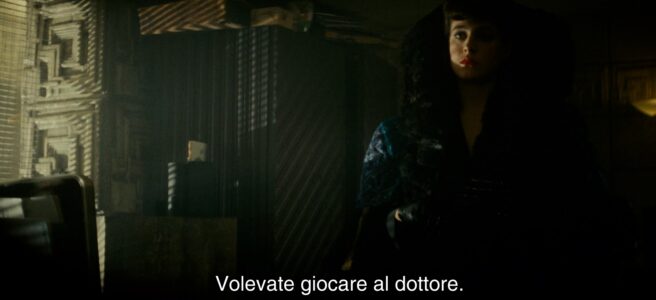
I did not begin by intending to write an article about Blade Runner (1982). The conversation began much farther away, with extreme phenomena in the universe: black holes, neutron stars, explosions and other realities that exceed ordinary human scale. Their beauty reminded me of Roy Batty’s monologue in the rain, although at that moment I could not even remember his name. From there arose the possibility of writing an in-depth review of Ridley Scott’s 1982 film, perhaps from a theological…
Continue reading
The Formal Limits of Speaking About God: From Cantor’s Absolute Infinity to Inexhaustible Representation
*This exploratory essay grew from personal theological reflection and sustained dialogue with AI. It investigates mathematical possibilities and limitations without claiming to present a new proof or completed formal theory.
I began with a question that seemed much simpler than the one I am now trying to formulate. Mathematics has studied infinity rigorously for more than a century and has shown that infinite collections can have different cardinalities. Theology, meanwhile, has spoken about the infinity and incomprehensibility of God for…
Continue reading
How WeChat Makes Us Classify One Another (and When “Friends” Become Contacts)

Most serious questions about platforms begin with something small enough to look trivial. In this case, it was a line: the nearly blank page that appears when I open someone’s WeChat Moments and find no visible posts.
At first, I treated this as a narrow question about blocking. Why does discovering that another person has hidden their Moments from me sometimes feel hurtful? Why do some users respond by immediately hiding their own Moments in return? Is this merely an…
Continue reading
Wer erschafft wen? Kunst, KI und die Transformation des Schaffenden
Mein vorheriger Essay, Building a Generative Artwork That Can Change Its Maker, endete mit dem Gedanken, dass das Kunstwerk geantwortet habe. Dieser Essay setzt dort ein, wo mir diese Formulierung nicht mehr ausreichte. „Antworten“ lässt noch immer zwei relativ stabile Partner vermuten: auf der einen Seite einen Schaffenden, auf der anderen ein vollendetes Werk. Was sich tatsächlich entwickelte, war weniger geordnet. Ein visuelles System erzeugte Formen; die Formen veränderten meine Fragen; die Reaktion eines anderen Menschen veränderte, wie ich…
Continue reading
Who Creates Whom? Art, AI, and the Transformation of the Maker
My previous essay, Building a Generative Artwork That Can Change Its Maker, ended with the thought that the artwork had answered back. This essay begins where that formulation became insufficient. “Answering back” still suggests two relatively stable partners: a maker on one side and a completed work on the other. What actually developed was less orderly. A visual system generated forms; the forms changed my questions; another person’s response changed how I understood the forms; an old theoretical vocabulary…
Continue reading
Eine generative Kunst schaffen, die ihren Schöpfer verändern kann: Von der Generierung zur Begegnung und wieder zurück
Drei Tage nachdem ich einen Artikel darüber veröffentlicht hatte, wie sich der Aktualisieren-Button meiner Website in eine künstlerische Geste der Komposition verwandeln lässt, lud mich Prof. Yvonne Dohna-Schlobitten unerwartet dazu ein, an ihrem sich entwickelnden internationalen Projekt als Künstler teilzunehmen – und beinahe im selben Atemzug auch in wissenschaftlicher Funktion. Dieses konkrete Werk hatte sie zu diesem Zeitpunkt noch nicht gesehen. Ich schickte es ihr, erklärte, dass jede Aktualisierung oder Navigation eine neue Komposition hervorbringen könne, und bat sie, es…
Continue reading
Building a Generative Artwork That Can Change Its Maker: From Generation to Encounter and Back Again
Three days after I published an article about turning the refresh button of my website into an artistic compositional gesture, Prof. Yvonne Dohna-Schlobitten unexpectedly invited me to participate in her developing international project as an artist—and, almost in the same breath, in a scientific capacity as well. She had not yet seen this particular work. I sent it to her, explained that every refresh or navigation could produce another composition, and asked her to try it. Her first response…
Continue reading
奇迹与 Loïc 被赋予的道德代价:论《冬天的故事》(1992)里的希望、信仰和确信(及其区别)
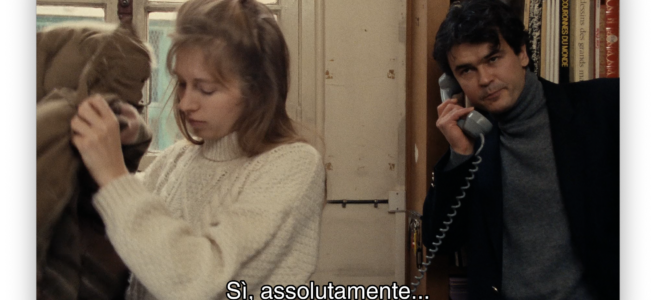
我原本以为,埃里克·侯麦(Éric Rohmer)的《冬天的故事》(Conte d’hiver, 1992)最终会让我思考爱情中的忠贞、偶然性,也许再加上一点神学。然而实际发生的却完全不是这样:我发现自己不断地在与菲莉茜(Félicie…
Continue reading
What Loïc Taught Me About the Moral Cost of a Miracle: A Tale of Winter (1992) and the Difference Between Hope, Faith, and Certainty
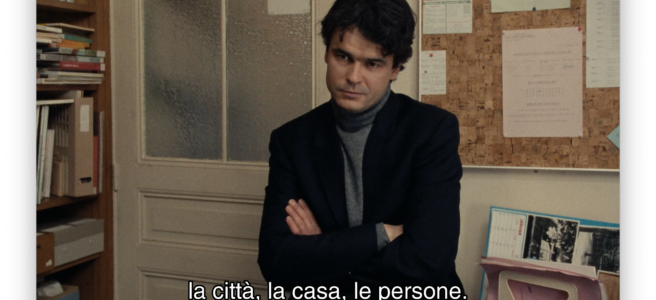
I expected Éric Rohmer’s Conte d’hiver (A Tale of Winter, 1992) to leave me thinking about romantic fidelity, chance, and perhaps a little theology. Instead, I ended up arguing with Félicie, defending her, criticizing her again, correcting some of my own criticisms after returning to the screenplay, questioning whether her “faith” is really faith, and finally becoming much more interested in Loïc than in the miraculous return of Charles. The film grew richer every time one of my…
Continue reading