
I began this inquiry with what appeared to be a relatively contained question. Professor Andrew Davison, Regius Professor of Divinity at Oxford, proposes that machine learning can be understood through the Thomistic category of instrumental causality. An instrument is a “moved mover”: it genuinely causes something, yet acts because it has been brought into an activity by a principal agent. A chisel really cuts stone, although the sculpture is attributed principally to the sculptor. Professor Davison’s account therefore gives instruments…
Continue reading
Theology
Mathematics at the Boundary Between Model and God: What Would a Mathematics of Non-Exhaustive Knowledge Prove
Methodological note: This appendix records a personal, AI-assisted research exploration at the intersection of theology, computer science and mathematical logic. The formulas below therefore have different statuses: some state established mathematical results; others propose notation or conjectural research structures; and the theological interpretations require arguments beyond mathematics. AI helped translate my questions into candidate formal language and locate relevant fields, but its fluency is not evidence.
The question that interrupted the formalization
The main essay ended with a possible research…
Continue reading
The Formal Limits of Speaking About God: From Cantor’s Absolute Infinity to Inexhaustible Representation
*This exploratory essay grew from personal theological reflection and sustained dialogue with AI. It investigates mathematical possibilities and limitations without claiming to present a new proof or completed formal theory.
I began with a question that seemed much simpler than the one I am now trying to formulate. Mathematics has studied infinity rigorously for more than a century and has shown that infinite collections can have different cardinalities. Theology, meanwhile, has spoken about the infinity and incomprehensibility of God for…
Continue reading
Toward a Boundary-Relative Computational Theology: What Must Theology Become to Be Verifiable?
I did not begin by trying to design a methodology for computational theology. I began with a much smaller and more personal question. I had written three essays whose subjects seemed rather different: a generative artwork that gradually changed my understanding of creation, my later return to that artwork as its beholder, and Éric Rohmer’s A Tale of Winter, which moved me from romantic hope toward questions of certainty, relational responsibility and the people left outside a miraculous ending.…
Continue reading
Can Theology Be Computed Without Being Reduced?: From Proof Checking to Machine-Scale Hermeneutics
A prediction about mathematics led me somewhere I did not initially expect. Jacob Tsimerman had suggested that artificial intelligence could become better than mathematicians at doing mathematics within two years. I began by asking how such an abrupt transition could be possible. The obvious question concerned capability: had AI suddenly acquired mathematical intuition comparable to that of the strongest human researchers? But another explanation seemed increasingly important. Mathematics may be among the earliest disciplines to experience this transformation because it…
Continue reading
奇迹与 Loïc 被赋予的道德代价:论《冬天的故事》(1992)里的希望、信仰和确信(及其区别)
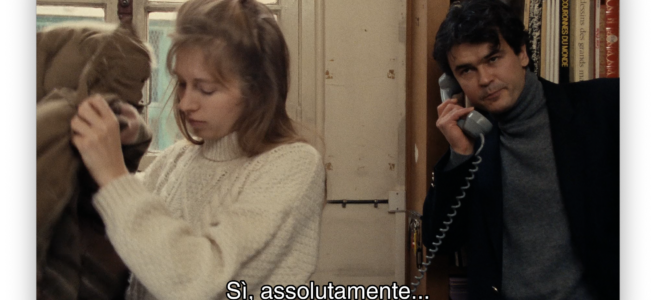
我原本以为,埃里克·侯麦(Éric Rohmer)的《冬天的故事》(Conte d’hiver, 1992)最终会让我思考爱情中的忠贞、偶然性,也许再加上一点神学。然而实际发生的却完全不是这样:我发现自己不断地在与菲莉茜(Félicie…
Continue reading
What Loïc Taught Me About the Moral Cost of a Miracle: A Tale of Winter (1992) and the Difference Between Hope, Faith, and Certainty
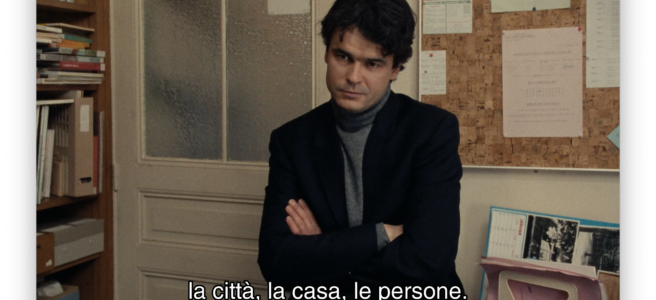
I expected Éric Rohmer’s Conte d’hiver (A Tale of Winter, 1992) to leave me thinking about romantic fidelity, chance, and perhaps a little theology. Instead, I ended up arguing with Félicie, defending her, criticizing her again, correcting some of my own criticisms after returning to the screenplay, questioning whether her “faith” is really faith, and finally becoming much more interested in Loïc than in the miraculous return of Charles. The film grew richer every time one of my…
Continue reading